Article: What 30 Years in the Industry Has Taught Us
What 30 Years in the Industry Has Taught Us
I’ve had so many calls from families caring for loved ones with dementia, Alzheimer’s, intellectual disabilities, autism, sensory disorders, brain injuries, and a range of neurological or developmental conditions, simply trying to make sense of behaviors they didn’t even know were part of the picture.
Most people are prepared for the more visible signs -forgetfulness, confusion, communication changes, or sensory overwhelm -but the other side of these conditions, the part no one talks about, often hits families completely out of the blue.
It’s not unusual for a parent, son, daughter, partner, or caregiver to call me whispering,
“We had no idea this could happen… is this normal?”
Or,
“We don’t know what to do next… no one told us it could get like this.”
And the truth is, these families aren’t calling because they want products.
They’re calling because they’re scared, tired, and trying their absolute best to keep someone they deeply love safe, comfortable, and treated with dignity.
Across so many conditions — dementia, Alzheimer’s, autism, intellectual disabilities, sensory processing challenges, mental health conditions, and neurological impairments - certain behaviors appear again and again.
Things like:
-
Removing clothing unexpectedly
-
Pulling at or taking off incontinence products
-
Undressing during the night or in public
-
Not understanding why clothing needs to stay on
-
Restless hands that pull or tug without meaning to
-
Confusion around toileting
-
Searching the body for discomfort they can’t explain
-
Trying to escape sensations that feel wrong, itchy, or overwhelming
These behaviors are far more common than people realize. But because they aren’t spoken about openly - and because so many families feel embarrassed even describing them — they often feel blindsided. They think they’ve done something wrong... when really, they’re experiencing something thousands of families face every single day.
I always tell them the same thing:
“You’re not alone. This is part of the condition, not something you caused. And yes - there are solutions that can help.”
These conversations - the tired voices, the quiet crying, the frustration, the “we don’t know what else to try” -are the reason we created our dignity-focused products in the first place.
Not to restrain.
Not to shame.
Not to “manage” anyone.
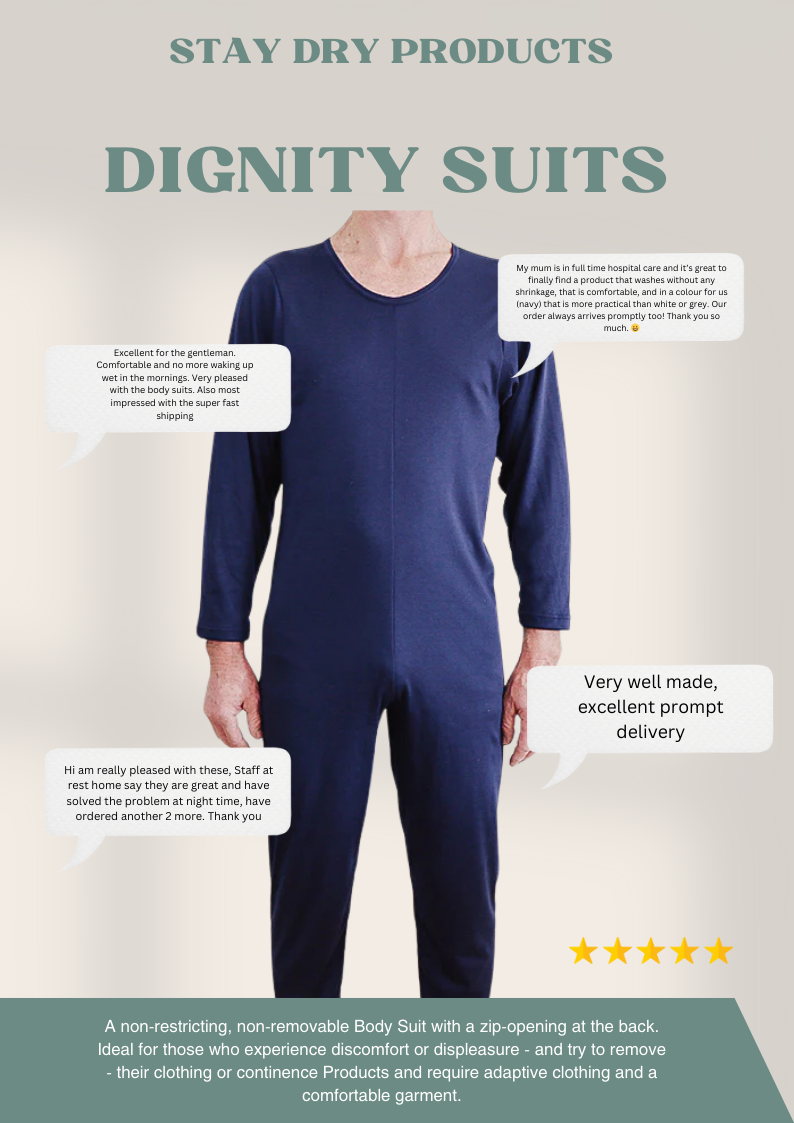
But to support families who love someone deeply, who are doing their best, and who often have no guidance when these behaviors appear. Our dignity suits exist so carers can have peace of mind, and the person they’re supporting can stay comfortable, protected, and dignified.
With Love & Understanding
Trish Hansen
Designer & Product Development Lead
Stay Dry NZ